
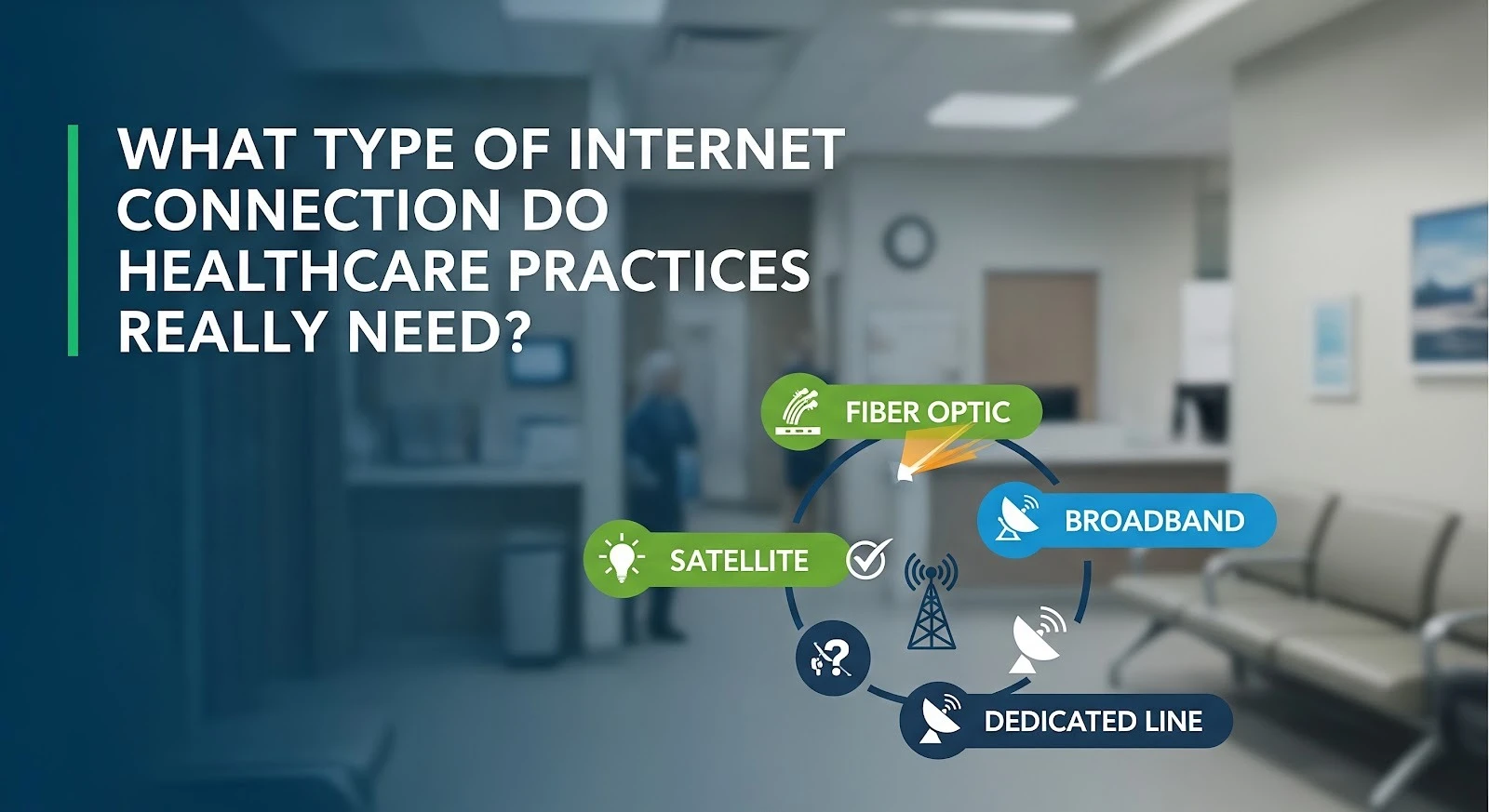
Clinic owners spend huge money on fancy chairs and high end medical gear. Then they run their entire operation on a cheap home internet connection. It boggles my mind.
Last year, I got a frantic call from a busy dental practice. Their connection died right in the middle of the morning rush. They could not process payments. They could not view X rays. They basically had to send people home. We ran the numbers later. That single three hour outage cost them exactly $4,250 in lost billable time. You want to save fifty bucks a month on a router? That is the real price you pay.
Your Entire Business Lives in the Cloud
Let’s get straight to the point. You don’t just need the internet. You need an unbreakable pipeline. Your entire practice runs in the cloud now. Think about it. Your practice management software lives on a server hundreds of miles away. Every appointment, patient note, and billing code travels through your internet pipe. If that pipe clogs, your business stops. Period.
When a consumer connection breaks, the telecom company might fix it by Thursday. Maybe Friday. When a business line drops, they guarantee a fix within hours. They put money on the line. You need that guarantee. Stop looking at the consumer brochures. Those are for streaming movies at home.
The Secret to Zero Downtime
But even the best connection will fail eventually. A backhoe digs up a cable down the street. A storm knocks out a node. Stuff happens. This is where most IT guys overcomplicate things. They try to sell you a massive enterprise fiber network. You don’t need that.
You just need the right foundation and a backup. This is exactly why you only shop for dedicated business nbn plans. They give you prioritized support and much better fault tolerance. Once you have that solid baseline, you build your safety net.
Get a decent commercial router. Plug your main internet into port one. Plug a 5G cellular modem into port two. Boom.
If the main line drops, the router instantly switches to the cellular network. The front desk won’t even notice. I set this up for a rural family practice last October. They’ve had three major local outages since then. They never dropped a single patient record. It cost them maybe an extra sixty dollars a month for the cellular backup.
Stop Obsessing Over Download Speeds
Let’s talk about speed for a second. People always obsess over download speeds. They buy the biggest number they see. A thousand megabits down. Great.
But how much data are you really downloading? You mostly pull text files and the occasional lab result.
Here is the catch. You push massive files out of your building all day long. Think about high resolution imaging. Think about telehealth video calls. You need upload speed. A standard home connection gives you terrible upload speeds. It throttles your staff. You end up with doctors staring at a loading bar while trying to upload a scan to a specialist.
Get a connection with a high upload tier. Symmetric speeds are the holy grail here. That means your upload matches your download. If you can get fiber to the premises, buy it immediately. Don’t even blink.
Throw Away the Free Plastic Box
Your internet service provider will mail you a free plastic box. They will tell you it does everything. It routes your traffic. It provides WiFi. It cures the common cold. Throw it in the trash.
I mean it. You cannot run a medical facility on a fifty dollar piece of plastic. I once audited a clinic complaining about dropped calls and slow software. I walked into their utility closet. They had a consumer grade router sitting on top of a microwave. Every time the staff heated up lunch, the WiFi crashed.
You need dedicated hardware. Buy a real firewall. Buy separate wireless access points and mount them on the ceiling. Hardwire every single desktop computer. Stop relying on WiFi for your front desk machines. Cables do not drop signals.
The Guest Network Disaster
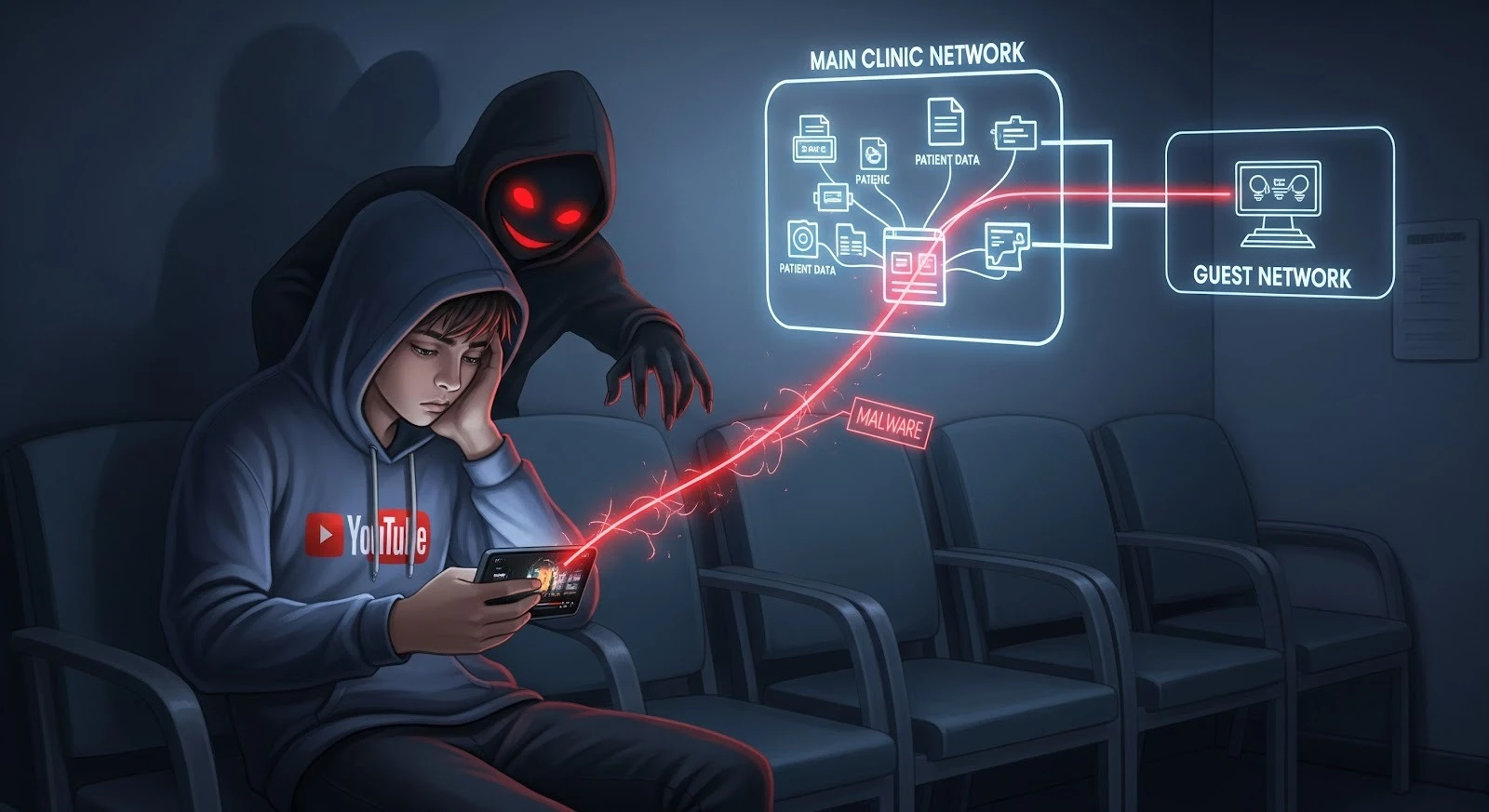
Then we have the security side of the equation. Patients expect free WiFi in the waiting room. Fine. Give them WiFi. But absolutely never let them on your main network.
I see clinics doing this constantly. They hand out the main WiFi password to teenagers watching YouTube in the lobby. You’re basically inviting strangers into your digital filing cabinet. Someone clicks a bad link on their phone, and suddenly malicious software attacks your network.
You must separate your traffic. Create an isolated guest network. Limit the speed on it so they don’t hog your bandwidth. Protect your clinical data like your life depends on it.
The Only Metrics You Care About
Forget the marketing jargon. Here is exactly what you tell your IT vendor to build.
- Redundancy: Two separate connections. If one dies, the other takes over instantly.
- High Upload Speed: You send heavy files out. You need a fast pipe pushing data up.
- A Service Level Agreement: Demand a business contract. Make the provider commit to fast repair times.
- Wired Workstations: Plug the front desk computers into the wall. Ditch the wireless cards.
If your setup misses any of these marks, you fly blind. You might save a few bucks this month. But the inevitable crash will wipe out a year of those savings in a single afternoon. Get ahead of it. Build a robust network now. Thank me later.