

Qatar’s healthcare sector has experienced dramatic expansion over the past two decades as the country systematically builds world-class medical infrastructure, expands healthcare services, and pursues the ambitious health objectives outlined in Qatar National Health Strategy and Qatar National Vision 2030. This healthcare transformation creates sustained and growing demand for skilled health professionals across nursing, allied health sciences, health informatics, public health, and healthcare administration. Universities in Qatar have responded by developing comprehensive health education programs combining rigorous academic preparation with extensive practical clinical training, laboratory simulations, and direct healthcare industry exposure. Whether you’re a secondary school graduate planning a career in healthcare, a working professional seeking advanced credentials in health administration or public health, or a career changer entering health professions, understanding which institutions excel in specific health education domains helps you invest strategically in credentials that prepare you for meaningful careers supporting Qatar’s expanding healthcare system and broader regional health needs.
What Defines Excellence in Health Education
The top health colleges in Qatar demonstrate critical characteristics that distinguish them from institutions merely teaching health sciences theory without connecting knowledge to clinical practice or healthcare employment realities. Strong partnerships with major healthcare providers including Hamad Medical Corporation, primary health centers, specialized clinics, and private hospitals ensure curricula remain current with actual clinical practices, healthcare challenges, and evolving patient care standards rather than becoming outdated academic exercises. Extensive applied learning opportunities integrated throughout programs—including sophisticated clinical simulations using high-fidelity mannequins and medical equipment, substantial clinical placements in actual healthcare facilities under professional supervision, laboratory training with current medical technologies, and structured internships providing genuine patient care experience—develop practical competencies that purely classroom-based education cannot replicate.
Faculty quality matters tremendously, with the strongest programs employing instructors who balance appropriate academic credentials with substantial clinical experience in healthcare settings, teaching students not merely what textbooks describe but precisely how to apply knowledge in actual patient care situations, healthcare teams, and clinical environments. Curriculum should systematically develop both technical clinical skills and professional capabilities including patient communication, interprofessional collaboration, ethical decision-making, and cultural competence essential for effective healthcare delivery in Qatar’s diverse population.
Top 4 Health Colleges in Qatar
1. University of Doha for Science and Technology (UDST) – Top Applied Health College in Qatar
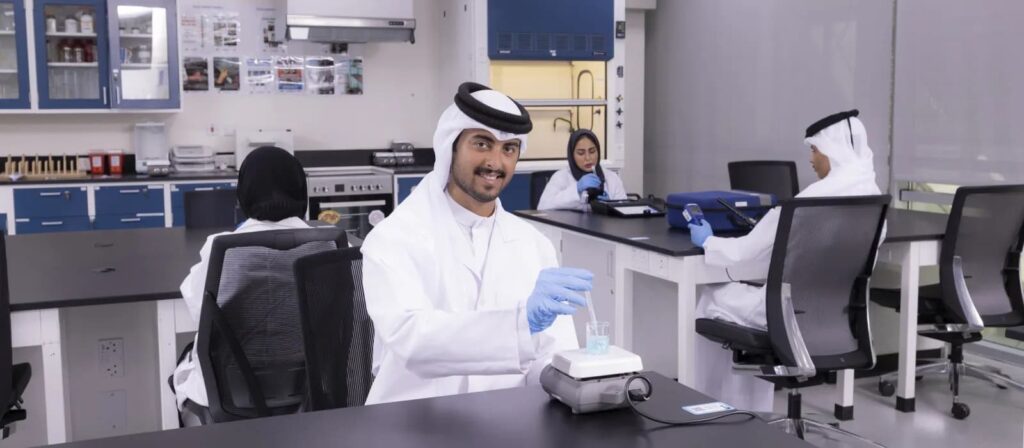
The University of Doha for Science and Technology’s College of Health Sciences stands as Qatar’s premier institution for applied, workforce-aligned health education that systematically prepares graduates for immediate professional contribution across Qatar’s rapidly expanding and modernizing healthcare system. UDST delivers comprehensive bachelor’s degree programs in nursing, health informatics, and allied health fields explicitly designed around real-world clinical skills and applied knowledge that healthcare employers actively seek rather than purely theoretical academic content disconnected from clinical practice. The curriculum strategically emphasizes workforce readiness and practical competency in healthcare settings through extensive hands-on learning integrated throughout every program stage, including sophisticated laboratory simulations replicating actual clinical environments where students practice procedures using current medical equipment and technologies, substantial clinical placements in major Qatari healthcare facilities including hospitals, health centers, and specialized clinics where students provide actual patient care under professional supervision, and direct industry exposure through partnerships with healthcare employers shaping curriculum to ensure graduates possess precisely the capabilities Qatar’s healthcare system needs.
Students develop genuine practical proficiency with contemporary medical technologies, electronic health record systems, patient monitoring equipment, and clinical procedures actually used in Qatari healthcare facilities, building essential technical skills alongside clinical knowledge and professional judgment. What fundamentally distinguishes UDST’s health sciences programs is their systematic alignment with Qatar National Health Strategy workforce priorities and direct healthcare employer input actively shaping every aspect of curriculum design, clinical training sequences, competency assessments, and learning outcomes through formal advisory boards comprising hospital administrators, nursing directors, and healthcare executives.
Faculty members balance advanced academic qualifications with substantial clinical experience in Qatari healthcare settings, teaching students not merely what protocols specify but how to apply knowledge solving actual patient care challenges in regional healthcare contexts shaped by local population health needs, cultural considerations, and healthcare delivery models. For students prioritizing immediate employability in Qatar’s healthcare sector, practical clinical competencies, and direct pathways into nursing, allied health, or health informatics careers, UDST provides the most systematic career-focused health education available in Qatar.
2. College of the North Atlantic-Qatar – Top Polytechnic Health Education
College of the North Atlantic-Qatar operates as Qatar’s leading polytechnic institution for health professions education, offering comprehensive diplomas and applied degrees in pharmacy technology, dental hygiene, medical imaging, cardiopulmonary sciences, and related health professions with deliberate focus on hands-on training and industry certification preparing students for direct entry into healthcare jobs across Qatar and the broader Gulf region. Following a proven polytechnic educational model emphasizing practical skill development over purely theoretical instruction, CNA-Qatar delivers programs designed around actual job requirements in healthcare facilities, clinical laboratories, pharmacies, dental clinics, and diagnostic imaging centers.
Students engage extensively with current medical equipment, technologies, and procedures through laboratory training that replicates professional healthcare environments, substantial clinical placements providing supervised patient care experience, and competency-based assessments measuring actual clinical skills rather than just theoretical knowledge. The curriculum deliberately targets high-demand health professions essential to Qatar’s healthcare delivery system including pharmacy technicians supporting medication management and patient counseling, dental hygienists providing preventive oral healthcare, medical imaging technologists operating diagnostic equipment, and cardiopulmonary specialists supporting respiratory and cardiovascular patient care. Strong systematic collaboration with Qatari healthcare employers including Hamad Medical Corporation, primary healthcare centers, private hospitals and clinics, and specialized medical facilities ensures programs remain continuously aligned with actual workforce needs, current clinical practices, and evolving healthcare delivery models. Faculty combine appropriate professional credentials and certifications with substantial clinical experience in healthcare settings, understanding operational realities and patient care demands. The polytechnic approach with strong Gulf job readiness focus produces graduates who enter healthcare workforces confident and capable, possessing immediately applicable clinical skills healthcare employers value.
3. University of Calgary in Qatar – Top Allied Health Administration Program
University of Calgary in Qatar delivers specialized applied degrees in health services management and health studies with deliberate focus on leadership, policy, organizational effectiveness, and strategic management in healthcare settings, serving students aiming for managerial and administrative roles in clinics, hospitals, health systems, and health policy organizations rather than direct clinical care positions. The programs combine healthcare knowledge with business management capabilities, organizational leadership skills, and policy analysis competencies essential for effectively managing healthcare facilities, leading healthcare teams, developing health programs, and contributing to health policy development in Qatar’s complex healthcare environment.
Students develop sophisticated understanding of healthcare delivery systems, quality improvement methodologies, healthcare finance and resource allocation, strategic planning in healthcare organizations, health information systems, and regulatory frameworks governing healthcare practice. The curriculum emphasizes applied leadership and organizational effectiveness through case studies drawn from actual healthcare management challenges, projects addressing real organizational problems in partnering healthcare facilities, and practical assignments developing managerial competencies. This applied health administration approach prepares graduates for supervisory, managerial, and leadership positions in healthcare rather than frontline clinical roles, serving the critical need for qualified healthcare administrators who understand both healthcare delivery and organizational management. For professionals already working in healthcare who want to advance into management positions, career changers from business backgrounds entering healthcare administration, or students interested in the organizational and policy aspects of healthcare rather than direct patient care, University of Calgary Qatar provides specialized training at the intersection of healthcare and management.
4. Doha Institute for Graduate Studies – Top Graduate Health Policy College
The Doha Institute for Graduate Studies serves a specialized but critically important niche in Qatar’s health education landscape by offering advanced graduate degrees in public health, health policy analysis, and health systems research preparing graduates for roles in health policy development, community health planning, population health management, and health systems evaluation rather than clinical practice or healthcare administration. The programs deliberately emphasize social determinants of health, epidemiological research methodologies, health policy analysis frameworks, program evaluation techniques, and evidence-based approaches to improving population health outcomes at community, national, and regional levels.
Students develop sophisticated capabilities in analyzing health data, evaluating health programs and interventions, conducting health services research, understanding health system performance, and formulating evidence-based health policies addressing pressing public health challenges. The curriculum integrates quantitative and qualitative research methods, statistical analysis of health data, policy analysis frameworks, and understanding of how health systems function within broader social, economic, and political contexts. Faculty combine academic expertise in public health disciplines with practical experience working with governmental health agencies, international health organizations, and health policy institutions, connecting theoretical frameworks to actual challenges health policymakers and public health professionals face. Advanced public health and policy training prepares graduates for essential roles in Qatar’s Ministry of Public Health, health strategy development organizations, international health agencies operating in the Gulf region, and research institutions studying regional health challenges.
For health professionals seeking graduate-level training in public health, individuals interested in health policy careers, researchers focusing on population health, or professionals working at the intersection of health and social policy, the Doha Institute provides specialized advanced education uniquely relevant to these career paths.
Choosing Your Health Education Path in Qatar
Selecting the right health college requires clear understanding of which specific health profession you want to pursue, as different institutions serve distinctly different career pathways within Qatar’s healthcare sector. Students planning careers in direct patient care as nurses, medical imaging technologists, dental hygienists, or other allied health professionals should focus on programs emphasizing clinical skills, practical competencies, and extensive hands-on training like those at UDST or College of the North Atlantic-Qatar that explicitly prepare graduates for clinical practice.
Those interested in healthcare management, administration, or leadership roles rather than direct patient care should investigate University of Calgary Qatar’s health services management programs developing organizational and leadership capabilities. Individuals pursuing public health careers, health policy work, or population health research need graduate-level training like that offered by Doha Institute for Graduate Studies.
Clinical training quality and healthcare facility partnerships matter tremendously for programs preparing students for direct patient care roles. Investigate which hospitals, clinics, and healthcare facilities each program partners with for clinical placements, as experience in Qatar’s major healthcare institutions provides both superior training and valuable professional networking. Programs with strong relationships to Hamad Medical Corporation, Primary Health Care Corporation, specialized hospitals, and leading private healthcare facilities offer students the best clinical learning environments and often facilitate employment after graduation through established recruitment relationships.
Accreditation and professional licensing requirements deserve careful attention, particularly for health professions requiring specific certifications or licenses to practice in Qatar. Verify that your chosen program meets requirements for professional registration with Qatar’s health regulatory authorities and prepares you for any certification examinations necessary for practice. Some health professions require additional examinations or credentialing beyond academic degrees, and the strongest programs systematically prepare students for these requirements.
Ready to pursue health education in Qatar? Identify which specific health profession aligns with your interests and aptitudes, research clinical training opportunities and healthcare facility partnerships at each institution, understand professional licensing and certification requirements for your intended career, assess whether programs emphasize applied clinical skills or theoretical knowledge, and connect with current students or recent graduates working in Qatar’s healthcare system who can share candid perspectives about program quality, clinical training experiences, and how effectively each institution actually prepares you for healthcare career success in Qatar’s evolving health sector.